

Our Office Time

8:00 AM - 05:00PM

Leave us your email

sales@idanimltd.com

Free Consultant

+972-72-3307533

Let's Talk
  • English
    • English
    • עברית
  • English
    • English
    • עברית
שעות פעילות

8:00 - 17:00

זמינים במייל

sales@idanimltd.com

ייעוץ חינם

072-3307533

בואו נדבר
  • English
    • English
    • עברית
  • English
    • English
    • עברית
  • Home
  • About Us
  • Products
    • Wires & Cables
    • Labels & Tags
    • Die Cut
    • Ribbons
    • Heat Shrinks
    • Packaging
    • Printers
    • Barcode Readers
    • Terminals
  • Industries
    • Military
    • Electricity
    • Industrial
    • Agriculture
    • Medical
    • Electronics
  • Articles
  • Contact Us
  • עברית
logotype
  • Home
  • About Us
  • Products
    • Wires & Cables
    • Labels & Tags
    • Die Cut
    • Ribbons
    • Heat Shrinks
    • Packaging
    • Printers
    • Barcode Readers
    • Terminals
  • Industries
    • Military
    • Electricity
    • Industrial
    • Agriculture
    • Medical
    • Electronics
  • Articles
  • Contact Us
  • עברית
  • Home
  • About Us
  • Products
    • Wires & Cables
    • Labels & Tags
    • Die Cut
    • Ribbons
    • Heat Shrinks
    • Packaging
    • Printers
    • Barcode Readers
    • Terminals
  • Industries
    • Military
    • Electricity
    • Industrial
    • Agriculture
    • Medical
    • Electronics
  • Articles
  • Contact Us
  • עברית
logotype
logotype
  • Home
  • About Us
  • Products
    • Wires & Cables
    • Labels & Tags
    • Die Cut
    • Ribbons
    • Heat Shrinks
    • Packaging
    • Printers
    • Barcode Readers
    • Terminals
  • Industries
    • Military
    • Electricity
    • Industrial
    • Agriculture
    • Medical
    • Electronics
  • Articles
  • Contact Us
  • עברית
article
ayelet 0 Comments
Share article:TwitterFacebookLinkedin
0 Views
1 Like

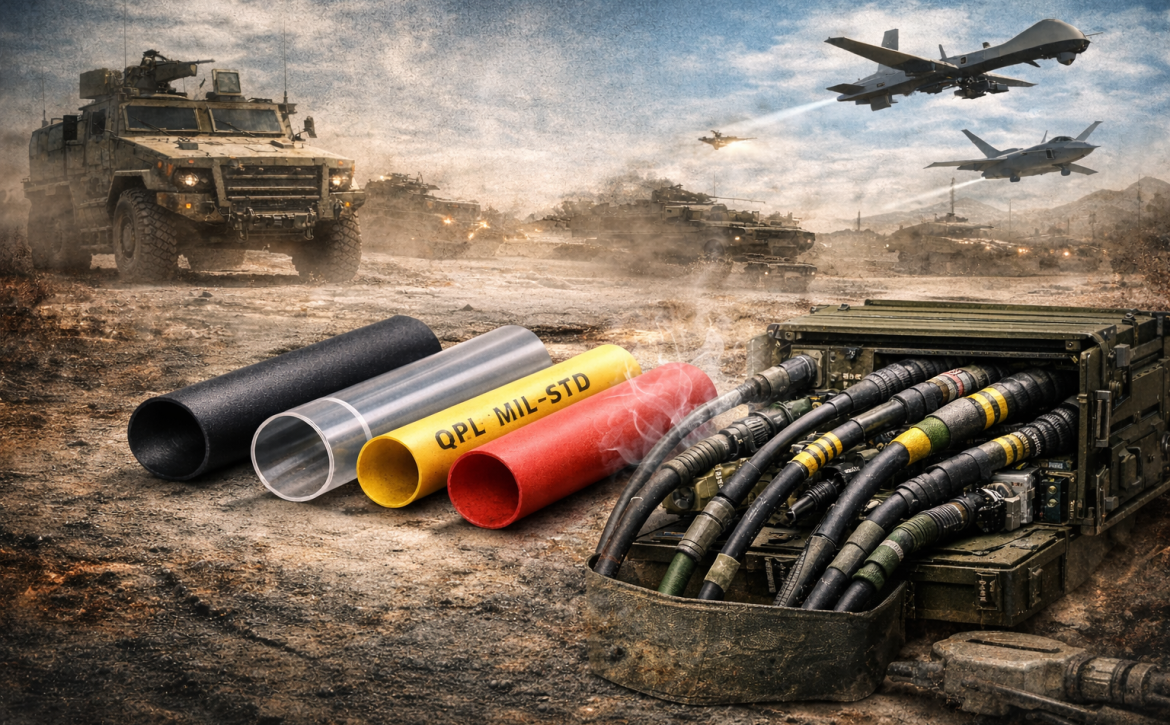
When Military Standards Matter- There’s No Room for Compromise: How to Choose Heat Shrink Tubing for Defense Applications

In a field where reliability is critical and wiring systems must withstand the harshest conditions, generic solutions simply won’t do. From armored vehicles to advanced tactical systems, the heat shrink tubing used to protect electrical assemblies must meet strict, well-defined military standards.

It may seem like a small detail, but in the field, every detail matters

Heat shrink tubing protects wires and cables from moisture, abrasion, vibration, chemicals, and extreme temperatures. It enables clean cable routing, prevents faults, and significantly extends system longevity, but only when matched precisely to the technical and environmental demands of the application.

In defense projects, even a minor mismatch can prove costly. That’s why compliance with standards isn’t optional- it’s essential!

MIL Standards, QPL – and Everything In Between

To ensure suitability for military use, heat shrink tubing must comply with MIL-STD specifications and appear on the QPL- The Qualified Products List of approved manufacturers. These aren’t just codes- they’re a stamp of reliability that distinguishes temporary fixes from mission-ready components designed for extreme environments.
The heat shrink sleeves we offer are approved by Israeli defense authorities, in accordance with the internal standards of local defense industries.

Heat Shrink Tubing: Matching Type to Purpose

The market offers a wide range of heat shrink tubing, each designed for different needs:
– Printing sleeves are intended for cable marking, compliant with MIL standards, and QPL approved.
– Standard wall tubing: For general use, offering basic protection against abrasion and moisture.
– Thin-wall tubing: Ideal for space-constrained areas, lightweight systems, or quick-shrink needs.
– High-temperature tubing: Built for extreme heat environments like military engines or aerospace platforms.
– Adhesive-lined tubing: Provides superior sealing and moisture resistance.
Clear or color-coded tubing: Enables easy identification using color codes or serial numbers.
– DR-type tubing: Meets MIL-DTL-23053 requirements and is QPL approved, ensuring reliability in mission-critical military and aerospace systems.
 
Selecting the right type is not just about availability; it’s about understanding the operational need.

Civilian Specs vs. Military Requirements: The Gap You Shouldn’t Ignore

In civilian applications, “close enough” is often considered good enough. But in military-grade systems, that phrase doesn’t exist. A component that lacks proper military certification may be disqualified from a project, even if it performs adequately under similar civilian conditions.

That’s why it’s critical to work with a partner who understands not only the product but the standards, language, and mission context that come with it.

The Selection Process: It’s About More Than Just a Part Number

A commonly used catalog number in the market does not automatically mean compliance. In many cases, a certified military equivalent exists, one that meets MIL/QPL requirements, allows operational flexibility, and is often more cost-effective or readily available. The right choice begins with understanding the requirement, not just recognizing the number.

A smart selection process includes:

– Defining environmental and exposure conditions
– Matching diameter and cable configuration
– Considering sealing, color coding, or labeling needs
– Verifying standards and current approvals
– Ensuring fit with your supply chain and documentation

How It Works in Practice

At Idanim, every engagement begins with a conversation. We listen to your requirements, analyze the operating environment, and evaluate a range of suitable options. Thanks to a broad portfolio of qualified manufacturers, high sourcing flexibility, and deep technical knowledge, we recommend precise solutions, not just what’s on the shelf.

The result: time savings, full compliance, and reliable long-term performance.

From the Field: Common Military Use Cases

– Armored vehicle systems: Sealing and protecting wiring inside engine and combat compartments
– Drones and airborne platforms: Lightweight, heat-resistant tubing for clean routing
– Tactical communication systems: Color-coded insulation and EMC-compliant sealing
– Mobile ground stations: Tubing built for deployment, packing, and rugged transport

Independent Expertise. Uncompromising Approach.

We don’t promote a single brand or push off-the-shelf fixes. We’re a technical organization committed to one thing only: delivering the best possible solution for the mission.

This approach enables us to offer:
– Multiple solutions from qualified global manufacturers
– High availability
– Full project-specific customization
– Competitive pricing for long-term planning

If you’re working on a project with clear requirements, strict standards, and tight timelines

Don’t settle for generic tubing. Turn to a partner who understands the field, speaks the language of standards, and brings a wide-angle view of the mission. We’re here to clarify the need, provide experienced advice, and deliver a solution that performs, even when failure isn’t an option.
READ MORE
article
Screenshot
ayelet 0 Comments
Share article:TwitterFacebookLinkedin
0 Views
4 Likes

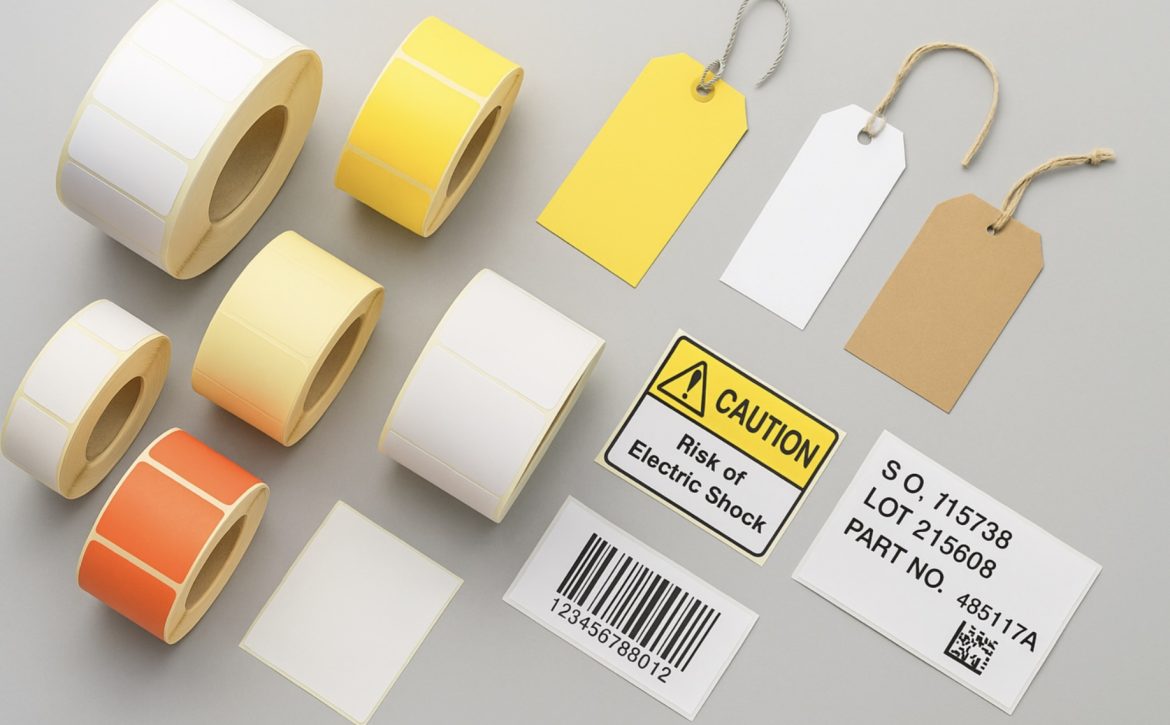
How to Keep Your Labels Clear in Any Condition and Environment

When “One-Size-Fits-All” Doesn’t Fit at All

In today’s business world, labeling and tagging are not just about aesthetics or regulatory compliance- they’re a critical part of operations, safety, and efficiency.
Labels and tags are used for identification, tracking, inventory control, quality assurance, and meeting strict compliance standards.

But here’s the question every business should ask:
Is your labeling solution truly designed for your environment, or is it just a “generic” option meant to work for everyone?

Why One-Size-Fits-All Often Fails

It’s tempting to choose a standard label solution that “works for most.” But every industry faces unique challenges:

  • In agriculture, Labels must survive months of strong sun, rain, and wind. They must remain readable despite high humidity, dust, and mud.
  • In manufacturing, Labels endure high production heat, exposure to dust and metal particles, oils, and harsh chemicals.
  • In defense, Labels must withstand extreme temperatures, physical wear, and rough handling, often in open-field, high-demand environments.

Your environment is unique. Your labeling solution should be too.
A “one-size-fits-all” label might seem convenient, but in reality, it can cost you in delays, replacement costs, and damage to your operational credibility.

The Secret to a Label That Lasts

At Idanim Technologies, we don’t settle for random, off-the-shelf products.
We start by deeply understanding your specific needs, then customizing every aspect of the labeling system:

  1. Material selection– Paper, polypropylene, polyester, UV-resistant synthetics, and more.
  2. Adhesive matching– Heat-resistant, cold-resistant, moisture-proof, chemical-proof, or removable adhesives.
  3. Printing method– Digital, direct thermal, thermal transfer, offset, or flexographic printing.
  4. Finishing and protection– Lamination, protective coatings, custom die-cuts.
  5. Real-world testing– Verifying performance in actual conditions before full implementation.

Wide Range of Ready-to-Ship Options

Beyond custom solutions, we maintain a local inventory of roll labels and tags in a variety of sizes, colors, and materials, ready for fast delivery.

This is especially valuable for businesses that cannot afford production stoppages or service delays. In many cases, we can deliver within just a few days.

Real-World Examples

  • Metal manufacturing plant– Heat-resistant labels up to 200°C, remaining clear after intense production processes.
  • Northern Israel farm– Durable tags that stayed legible through months of sun, rain, and high humidity.
  • Defense logistics unit– Identification tags resistant to abrasion and contact with oils, maintaining reliability over time.

Why Businesses Choose Idanim Technologies

  • Multi-industry expertise– Industry, defense, agriculture, retail, logistics, and more.
  • Quality and value– Effective, reliable solutions without exceeding budget.
  • Uncompromising reliability– Meeting deadlines and delivering as promised.
  • Local stock availability– Fast fulfillment from nearby inventory.
  • Innovation in customization– Unique solutions for complex needs.

The Bottom Line- The Right Solution Starts with You

The best label isn’t the one sitting on a shelf- it’s the one built for your environment, your challenges, and your goals.

Let’s find the perfect labeling solution for your exact needs.

READ MORE
headup 0 Comments
Share article:TwitterFacebookLinkedin
0 Views
3 Likes

1D Barcode Scanners

The Ultimate Guide to 1D Wireless Barcode Scanners: Boosting Business Efficiency with Mobility and Speed

In today’s fast-paced retail, logistics, and warehousing environments, efficiency is key. One of the tools revolutionizing operations in these industries is the 1D wireless barcode scanner.
a compact, reliable device that combines precision scanning with the freedom of mobility. Whether you’re managing inventory in a warehouse, running a busy retail checkout line, or streamlining stock in a healthcare facility, 1D wireless scanners provide the agility and performance your business needs.

What is a 1D Wireless Barcode Scanner?

A 1D barcode scanner reads linear barcodes. the classic black-and-white striped codes seen on most product packaging. Unlike 2D scanners that read QR codes and matrix-style codes, 1D scanners are optimized for rapid, high-volume scanning of traditional barcodes.

The wireless functionality allows users to operate the scanner without being tethered to a computer or POS system, improving movement and flexibility in demanding work environments.

Key Benefits of 1D Wireless Barcode Scanners

  • Enhanced Mobility: Wireless connectivity (often via Bluetooth or RF) allows employees to scan items throughout the workspace without being limited by cables.
  • Speed and Accuracy: Modern 1D wireless scanners deliver lightning-fast read rates, ideal for fast checkout lanes, high-volume logistics, and dynamic environments.
  • Durability and Range: Many models offer extended scanning ranges (up to several meters) and are built to withstand drops, dust, and minor splashes, perfect for industrial use.
  • Ease of Use: Most 1D scanners are plug-and-play, with intuitive operation and ergonomic design, making them ideal for long shifts with minimal training.
  • Battery Efficiency: Long-lasting rechargeable batteries ensure your device runs all day without interruption.

Best Use Cases for 1D Wireless Scanners

  • Retail Stores: Speed up customer checkout, manage inventory, and scan shelf tags from anywhere on the floor.
  • Warehouses and Distribution Centers: Accurately track and trace products, conduct cycle counts, and reduce human error.
  • Healthcare Settings: Use in patient care for scanning wristbands, medication labels, and equipment tags while maintaining hygienic mobility.
  • Field Service and Mobility: Perfect for mobile workers who need to scan product codes in delivery trucks or pop-up stations.

Choosing the Right 1D Wireless Scanner

When selecting a 1D wireless barcode scanner, consider the following factors:

  • Scanning Range: Choose a model with a range suitable for your workflow. close-range for POS or extended-range for warehousing.
  • Connectivity: Most scanners offer Bluetooth or proprietary RF technology; ensure compatibility with your system.
  • Battery Life: Look for scanners with all-day battery life and fast charging capabilities.
  • Durability: Check for drop specs (e.g., 1.5m drop resistance) and IP ratings (e.g., IP42 or IP52 for dust and water resistance).
  • Supported Interfaces: Ensure the scanner works with your POS, tablet, or computer (USB, RS-232, Keyboard Wedge, etc.).

Discover Our Collection of 1D Wireless Scanners

At [Your Company Name], we offer a curated selection of industry-leading 1D wireless barcode scanners from top brands such as Zebra, Honeywell, Mindeo, and more. Each model is carefully selected for its reliability, speed, and ease of integration with existing systems.

Explore our collection here:
Browse 1D Wireless Barcode Scanners

Ready to Upgrade Your Scanning Workflow?

1D wireless barcode scanners are no longer a luxury. they’re a necessity for businesses aiming to stay competitive, accurate, and agile. Investing in the right scanner can significantly reduce errors, improve workflow, and increase overall efficiency.

For expert advice or custom recommendations, feel free to contact our team. we’re here to help you find the perfect barcode scanning solution for your business.

READ MORE
article
ayelet 0 Comments
Share article:TwitterFacebookLinkedin
0 Views
3 Likes

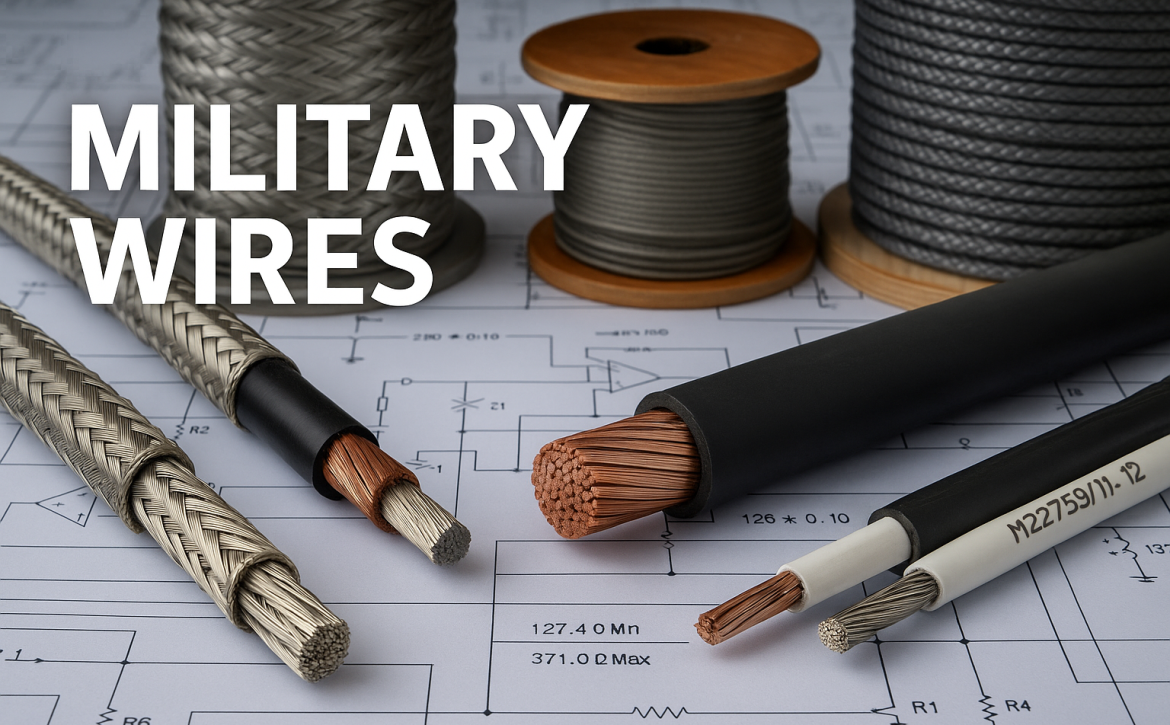
Military-Grade Wires 

Why Every Critical System Starts with the Right Wire?

In the defense industry, there is zero room for error. Military, aerospace, and naval systems must perform flawlessly under any condition and comply with the most stringent standards. Often, it is the “silent” components – the wires and cables that transmit power and data – that keep the entire system operational.

When a wire is not properly specified or lacks the required certification, it is not just a technical issue – it becomes a single point of failure that can compromise the entire system.

This is why in defense applications, there are no compromises. Wires must be QPL-approved and meet MIL-STDspecifications.

What Makes Defense-Grade Wires Different?

Military-standard wires are specifically designed to operate in extreme conditions:

  • High and low temperature ranges
  • Humidity, water, and salinity exposure
  • Continuous vibration and mechanical stress
  • Resistance to fuels, oils, and chemicals

These wires are tested not only for performance but also for manufacturing consistency and long-term reliability.

What is QPL and why is it Essential?

The QPL (Qualified Products List) certification indicates a product has successfully passed rigorous testing and is approved for military use.

For engineers and procurement professionals, QPL approval is both a technical and business advantage:

  • Saves time in qualification testing and ensures acceptance in defense tenders
  • Guarantees compliance with IDF, NATO, and international defense standards
  • Minimizes project risk and prevents costly failures in the field

Who Requires QPL-Approved Wires?

  • Development engineers in the defense and aerospace sectors
  • Procurement managers are responsible for critical system reliability
  • Manufacturers and integrators of ground, naval, and airborne platforms
  • Civilian companies producing systems for defense applications

How to Select the Right Wire for a Defense Project

  1. Define environmental conditions: temperature range, humidity, vibration, load
  2. Verify required standards: MIL-STD and QPL compliance
  3. Choose appropriate insulation and shielding based on system requirements
  4. Confirm that full documentation and certification are available
  5. Consult with technical experts to avoid errors and costly retesting

Why Work with Idanim Technologies?

  • Local stock and immediate availability for urgent projects
  • Extensive experience supplying to the defense and aerospace industries
  • Engineering support for both development teams and procurement departments
  • Professional service and competitive pricing without compromising on quality

We understand the pressure of strict deadlines and the importance of full compliance. Our solutions are built to meet both.

Frequently Asked Questions

Can I order small quantities for prototyping?
Yes, we supply both cut-to-length wires and full reels.

What is the typical lead time?
Most models are available for immediate delivery from local stock.

Do you work with civilian companies supplying the defense industry?
Yes, we also support civilian OEMs developing products to military specifications.

Do the wires include official certifications?
All wires are supplied with complete documentation, including QPL approvals and Certificates of Conformance (CoC).

Order QPL-Approved Wires

Your specifications may be complex, but choosing QPL-approved military wires is straightforward.
It is the most reliable way to ensure your system meets every standard, every time.


View All Military Wires & Cables

Request a Quote for Your Project


READ MORE
headup 0 Comments
Share article:TwitterFacebookLinkedin
0 Views
30 Likes

Heat Shrink Tubing: A Guide to Types and Applications

Heat shrink tubing is a critical component in the defense, electronics, automotive, and high-tech industries. It is used for insulation, sealing, marking, mechanical protection, and compliance with strict military standards. A wide variety of heat shrink tubing exists, ranging from UL-certified sleeves for general use to military-grade and QPL-approved products for sensitive defense applications. Choosing the right type of heat shrink sleeve directly impacts product reliability, wiring longevity, and compliance with technical standards.

Idanim Technologies, an authorized supplier to Elbit, Rafael, Israel Aerospace Industries, and the Ministry of Defense, offers a wide selection of advanced heat shrink solutions, with or without adhesive, in various sizes, and compliant with international standards.

Main Types of Heat Shrink Tubing

  • Clear Heat Shrink Sleeve
    Made from polyolefin, this sleeve provides insulation and mechanical protection while allowing visibility of printed labels or markings beneath it. Available in 2:1 or 3:1 shrink ratios and in a range of diameters, with UL or military QPL certifications upon request.
    Applications: Cable marking, component ID, serial tracking during testing and integration.
  • Electrical/Insulation Heat Shrink Sleeve
    Designed for electrical insulation of wires, splices, and cables. Offers high-voltage resistance, tolerance to extreme temperatures, and durability in harsh environments. Available in thin-wall or heavy-wall versions.
    Applications: Electrical panels, control systems, industrial cables, military electronics.
  • Adhesive-Lined Heat Shrink Sleeve
    Features an internal layer of hot melt adhesive that melts upon heating, creating a hermetic seal. Provides high resistance to water, oil, and dust. Available as thick-wall tubing for enhanced mechanical protection.
    Applications: Cable ends, sealing connectors, outdoor or wet environments, military power systems.
  • Non-Adhesive Heat Shrink Sleeve
    Ideal for marking and insulation where hermetic sealing is not required. Easy to install, grips cables well, and available in various colors.
    Applications: Electronics, cable harnesses, test systems.
  • Heavy-Wall Heat Shrink Sleeve
    Thick-walled tubing designed for mechanical protection, high-voltage insulation, and sealing in demanding environments. Available with or without adhesive, including QPL-approved versions.
    Applications: Infrastructure systems, power stations, military, avionics, armored vehicles.

Additional features: Tubing is available in various colors for marking purposes, can be pre-cut to specific lengths, and can include pre-printed identification.

When to Use Adhesive vs. Non-Adhesive Tubing

Application ScenarioUse AdhesiveNon-Adhesive
Outdoor / Humid Environment✅❌
Internal Insulation❌✅
Hermetic Seal Required✅❌
Marking Only❌✅
Oil or Chemical Exposure✅❌

In enclosed or sealed environments (e.g., inside a waterproof box), non-adhesive tubing may be sufficient. For any exposure to outdoor conditions, adhesive-lined tubing is essential to prevent moisture ingress.

Advantages of Heat Shrink Tubing

  • Perfect fit for various diameters (shrink ratios: 2:1, 3:1, 4:1, 6:1)
  • Combines electrical insulation with environmental sealing
  • Reduces wear, moisture, and chemical damage
  • Stabilizes and secures connectors
  • Clear marking and label protection
  • Easy installation, time-saving, low maintenance

Quality Standards- QPL & MIL Compliance

In defense projects and Ministry of Defense applications, there is no room for compromise. Only heat shrink sleeves that meet standards such as MIL-DTL-23053 and are QPL-approved are considered suitable.

Idanim Technologies imports military-grade and QPL-certified heat shrink tubing from leading manufacturers, approved by Elbit, Rafael, IAI, and the Ministry of Defense.

These products are certified for sensitive military applications and delivered with full documentation, technical datasheets, and manufacturer’s certifications as required by defense authorities.

Conclusion

Choosing the right heat shrink tubing depends on the application, work environment, required standard, and insulation needs. For defense and sensitive systems, it’s critical to ensure that the tubing is QPL-approved and supplied by an authorized source.

Idanim Technologies will be happy to support you in selecting the exact tubing you need. offering fast samples, technical consultation, and professional supply backed by military standards.

READ MORE
headup 0 Comments
Share article:TwitterFacebookLinkedin
0 Views
33 Likes

Heat Shrink Sleeves

What Are They and How Are They Used?

Heat shrink sleeves (also known as heat shrink tubing) are essential connection accessories used to securely and efficiently join and unify cables and wires. These components are widely used in many industries. from electrical and electronics to defense, aerospace, and automotive. In the electrical sector, heat shrink sleeves are a common and vital solution for cable joining and protection, and are considered a fundamental component in power infrastructure and critical installations.


What Are Heat Shrink Sleeves?


A heat shrink sleeve is a sleeve or dedicated connector used for unifying, insulating, and protecting cable connections. These sleeves are typically made from heat-shrinkable materials and often contain an inner adhesive that melts when heated, forming a hermetic and durable seal suitable for harsh environmental conditions. The use of heat shrink sleeves ensures the connection is protected from moisture, dust, oils, fuels, and chemicals. They are characterized by their thick walls and high flexibility, enabling them to conform perfectly to various connection shapes, including connectors to cables. Heat shrink sleeves with inner adhesive enhance sealing and durability, especially when environmental sealing is critical.


Types of Heat Shrink Sleeves


Many types of heat shrink sleeves differ by material, wall thickness, length, diameter, and additional features such as internal adhesive, UV protection, or chemical resistance. Thin-wall sleeves are available for quick and easy installations, while thick-wall options are suited for harsh outdoor environments or military use. Some sleeves can withstand operating temperatures up to 135°C or higher, and comply with standards such as UL, ROHS, and even military standards like MIL.


Advantages of Using Heat Shrink Sleeves:


• Excellent Protection: Heat shrink sleeves provide perfect insulation and protect against environmental damage such as moisture, dust, heat, oils, and chemicals.
• Long-Term Durability: Heat-shrinking sleeves create a strong, hermetic, and long-lasting seal, even under extreme conditions.
• Quick and Easy Installation: Heat shrink sleeves significantly reduce installation time compared to traditional connection methods.
• Customizable Solutions: Sleeves can be tailored to specific needs—diameter, length, and protection properties.
• Harsh Environment Compatibility: Heat shrink sleeves are designed for extreme environmental conditions, including high temperatures, high humidity, submersion, underground, and corrosive environments.


Applications Across Industries:

Defense and Aerospace Industry: In critical systems such as weapons platforms, advanced electronics, and communication systems, heat shrink sleeves provide reliable, compliant solutions meeting strict military standards. Military-grade sleeves (e.g., MIL-DTL-23053) are specially designed for operational use in extreme field conditions, offering excellent sealing, insulation, and protection. Resistance to vibration, extreme temperatures, oils, and sunlight makes them a preferred choice in defense and aerospace projects.


In Conclusion, heat shrink sleeves offer a reliable, efficient, and cost-effective solution for cable protection and unification across a wide range of industries. Leading companies like “Idanim Technologies” specialize in supplying high-quality heat shrink sleeves that meet the most stringent standards and are suited for diverse industrial applications, from urban electrical infrastructure to sensitive defense projects.

READ MORE
headup 0 Comments
Share article:TwitterFacebookLinkedin
0 Views
45 Likes

Thermal Transfer Ribbons


Everything You Need to Know About Thermal Transfer Ribbons – Types, Applications, and Proper Selection

In thermal printing systems, the ribbon is a key component that directly impacts print quality, durability, and operational cost. Using the wrong ribbon can result in faded or peeling labels, especially in industries like logistics, electronics, medical, and defense.

This guide explains what ribbons are, the types available, when to use each one, and how Idanim Technologies delivers a complete, high-quality solution for your printing needs.


What Is a Ribbon?

A ribbon is an ink-coated film used in Thermal Transfer printers. It is placed between the printhead and the label. When heat is applied, the ribbon transfers the ink to the label in a sharp, durable, and precise manner—resulting in a professional, long-lasting print that withstands challenging conditions.

Ribbons come in various widths and core configurations (inside/outside wound) and are compatible with printers like TSC, Citizen, GAINSCHA, and others.


Types of Ribbons – What’s the Difference?

🔹 WAX Ribbon

  • Suitable for printing on standard paper labels
  • Affordable, fast, and widely used in warehouses, shipping, and temporary product tagging
  • Low resistance to outdoor conditions, abrasion, and moisture

🔹 WAX-RESIN Ribbon

  • Combines the print sharpness of wax with improved durability from resin
  • Suitable for coated labels, PP, PVC, and some polyester labels
  • Ideal for semi-permanent tags, logistics, and light industrial use

🔹 RESIN Ribbon

  • Offers excellent resistance to abrasion, chemicals, water, and UV exposure
  • Suitable for materials like polyester, vinyl, Lexan, and tagmat
  • Applications: industry, defense, electronics, outdoor labeling, medical components

🔹 ULTRA RESIN Ribbon

  • The highest-grade solution for extremely harsh conditions
  • Resistant to very high temperatures, industrial solvents, steam, and UV
  • Commonly used with materials like polyester, Kapton, Lexan, and technical coatings
  • Widely used in defense, medical, precision tagging, and permanent storage

How to Choose the Right Ribbon

  1. Based on Label Material:
  • Paper Labels → WAX
  • Coated Labels, PP → WAX-RESIN
  • Polyester, Vinyl → RESIN
  • Kapton, Tagmat, Ultra → ULTRA RESIN
  1. Based on Usage Environment:
  • Office, indoor storage → WAX
  • Logistics, light humidity → WAX-RESIN
  • Chemical exposure, outdoor use → RESIN
  • Harsh environments, high temperature, defense → ULTRA RESIN
  1. Based on Your Printer:
  • Ensure ribbon width, winding direction, and core size match your printer
  • Ribbons are available for TSC, Citizen, GAINSCHA, and others
  • Idanim provides precise compatibility based on printer model + label material

Advantages of Working with Idanim Technologies

  • Wide ribbon selection in stock – covering all types and sizes
  • Expert guidance – tailored to label material, printer model, and field conditions
  • Fast service – prompt delivery with most models available immediately
  • Sample availability – test before you buy
  • High-quality ribbons – suitable for barcodes and variable data printing

In Summary

Choosing the right ribbon is a critical step in producing clear, professional, and durable labels.
Idanim Technologies will help you select the ideal ribbon for your label type, printer, and operating environment.
We specialize in supporting clients in industries like defense, electronics, logistics, and more—providing reliable, efficient, and fast solutions.

📞 Call for consultation or ribbon samples: +972-8-9122998
📧 Email: sales@idanimltd.com

READ MORE
headup 0 Comments
Share article:TwitterFacebookLinkedin
0 Views
44 Likes

Thermal Label Printers


Everything You Need to Know About Thermal Label Printers – The Smart Choice for Industry

The need for clear, precise, and durable labeling of products, components, packaging, and cables has made thermal label printers one of the most critical systems in modern production lines and warehouses. In this article, we’ll explore the different types of printers, explain what thermal and thermal transfer printers are, examine the advantages, guide you on how to choose the right printer, and present Idanim Technologies’ tailored solutions.


Types of Label Printers

In industrial environments, label printing is mainly done with thermal technology, which is divided into two main categories:

  • Direct Thermal Printers
    Print directly onto heat-sensitive labels without the need for a ribbon. This method is suitable for short-term applications such as logistics, shipping, and temporary product tagging.
    Today, there are also protected thermal materials that allow for greater durability, including outdoor use, sun exposure, and humidity – significantly expanding the use cases for direct thermal printers.
  • Thermal Transfer Printers
    Use a ribbon that transfers ink onto the label using heat. This method provides long-lasting, durable prints suitable for industrial, military, medical, cable tagging, control panels, and permanent labeling.

What Are Thermal Label Printers and What Ribbon Types Are Available?

Thermal Transfer printers require a dedicated ribbon – an ink film that melts under heat and transfers to the label surface. There are three main types:

  • WAX Ribbon – For printing on paper labels. Ideal for internal shipping, warehouse labeling, and temporary information.
  • WAX-RESIN Ribbon – A more durable solution that delivers high-quality print on materials like polyester or PP. Suitable for regular industrial environments.
  • RESIN Ribbon – The most advanced and durable option. Suitable for outdoor use and exposure to heat, humidity, oils, and chemicals. Commonly used in military, medical, and cable applications.

Choosing the right ribbon ensures optimal print quality, long-term readability, and full compatibility with the label material.


Advantages of Thermal Label Printers

  • High Print Speed – Ideal for production lines and active warehouses
  • Sharpness and Accuracy – Supports barcodes, serial numbers, and variable data
  • Durability – The print remains clear even under harsh conditions
  • Cost-Efficient – No need for ink or expensive toner
  • Wide Media Compatibility – Paper, polyester, vinyl, Lexan, anti-static materials, and more

How to Choose the Right Printer?

Before purchasing, ask yourself:

  • What’s the expected daily/monthly print volume? Small batches or continuous production?
  • What type of label material is used? Vinyl, paper, durable labels?
  • Are there environmental resistance requirements? – Important for selecting the right ribbon and media
  • What is the label width? – Not all printers support all sizes
  • Required connectivity – USB, Ethernet, WiFi depending on your setup

Printer Models Offered by Idanim Technologies

Idanim Technologies provides a wide range of thermal label printers, including desktop and industrial models:

  • TSC TE210 – A reliable desktop printer for daily use. Suitable for cables, electrical panels, product labeling. Compatible with Wax, Wax-Resin, and Resin ribbons.
  • Citizen CLE-720 – A heavy-duty industrial printer. Suitable for production lines, mass shipping, and packaging.
  • Citizen CL-E321 – A compact desktop printer, ideal for office, lab, and warehouse use.
  • GAINSCHA GA-2408T – An advanced desktop printer with high speed and 203/300 DPI resolution. Supports all ribbon types and fits cable, shipping, electronics, and defense applications.

Delivery Times and Benefits of Working with Idanim

  • In-Stock Products – Fast delivery of printers, ribbons, and labels
  • Professional Support – Installation guidance, technical assistance, and warranty
  • Customization Options – Based on client requirements, including print sample before purchase
  • One-Stop-Shop – Get your printer, ribbon, and label from a single source

Who Is It For?

  • Industrial manufacturing and machinery factories
  • Cable and electronics manufacturers
  • Logistics centers, warehouses, and shipping companies
  • Laboratories, cleanrooms, and medical environments
  • Defense and military projects

Summary

A thermal label printer is a critical tool for efficient, accurate, and durable operations across industries.
Idanim Technologies supports dozens of clients in selecting, implementing, and maintaining the right printing systems—including supplying printers, ribbons, labels, and full technical support.

READ MORE
headup 0 Comments
Share article:TwitterFacebookLinkedin
0 Views
42 Likes

All About Label Printer

All About Label Printers: Who Needs Them and How to Choose the Right One

In an era of automation, logistics tracking, and smart packaging – using a label printer has become an integral part of the production, storage, and marketing process of any product. Whether in the defense industry, electronics manufacturing, logistics, food, or pharma – label printers are a critical tool for identification, marking, tracking, and even for preventing operational errors.

What Is a Label Printer?

A label printer is a device that produces labels containing either variable or fixed data. These labels can be printed directly onto rolls or individual stickers. Labels serve numerous purposes such as product identification, shipping documents, barcodes, serial numbers, company logos, safety instructions, and more.

There are many types of label materials, including:

  • Paper labels
  • Polyester
  • Polypropylene
  • Kapton
  • Outdoor-durable labels
  • Transparent labels
  • Colored labels

Each material offers unique advantages and is selected based on the work environment in which it will be used.

Who Needs Label Printers?

  • Manufacturing plants – for marking products, components, and packaging
  • Shipping and logistics companies – for labeling boxes, inventory tracking, and shipping documentation
  • Defense and electronics sectors – for marking components according to standards and maintenance tracking
  • Food and pharma industries – for listing ingredients, production/expiration dates, and regulatory data
  • Retail companies – for pricing, promotions, and product identification

In addition, there is growing demand in medical, scientific, and laboratory environments for precise, durable, and often custom labels.

What Makes a Good Label Printer?

Label print quality depends on several key factors:

Material Compatibility

  • Paper labels are more affordable but less durable
  • Polyester, polypropylene, or PVC labels are more suitable for outdoor, heat, or humidity resistance

Ribbon Type (Printing Film)

  • Choose from Wax, Wax-Resin, or pure Resin based on durability requirements

Print Resolution

  • Printers offer resolutions of 203, 300, or 600 dpi depending on text or barcode size

Printing Method

  • Depending on material, choose between Thermal Transfer or Direct Thermal printers

The correct combination of material, ribbon, and printer ensures a durable, readable, and accurate label for your product.

How to Choose the Right Label Printer?

When selecting a label printer, consider the following:

  • Daily or monthly printing volume
  • Label type (paper/plastic/polyester)
  • Environmental durability needs (heat, water, chemicals)
  • Compatibility with your IT systems (USB, Ethernet, Wi-Fi)
  • Ribbon and material compatibility

Idanim Technologies – Industrial Label Printer Solutions

Idanim Technologies offers a wide range of label printers including:

  • Compact desktop printers for low volumes and small labels
  • Industrial printers from brands like TSC, ZEBRA, CITIZEN – suited for automated production lines
  • Rugged printers for harsh environments – supporting durable ribbons and printhead protection

Additionally, Idanim supplies high-quality ribbons (Wax, Wax-Resin, Resin) and offers custom-cut labels, including pre-printed logos, color markings, or fixed barcodes.

Common Labeling Uses in Industry

  • Final product, component, and assembly part marking
  • One-dimensional and two-dimensional barcode printing
  • Preventive maintenance tracking
  • Personal identification or military-grade item marking
  • Smart label integration (RFID)
  • Content marking on returnable boxes/containers

Benefits of Modern Label Printer

  • Maximum accuracy in data capture and identification
  • Smart tracking and documentation in industrial and defense processes
  • Resistance to harsh conditions – thermal labels withstand heat and humidity
  • Automation integration – print directly from ERP or logistics systems
  • Time and cost savings – no need for pre-printed stock, full flexibility

In Summary

Label printers are much more than technical tools – they are strategic assets in every production, shipping, quality control, and inventory process.
Investing in a professional label printer reduces errors, improves workflow, and enhances reliability with your customers.

Idanim Technologies provides complete end-to-end label printer solutions: consultation, printers, labels, ribbons, software, and full technical support.
Contact us today for a tailored solution that fits your exact needs.

READ MORE
headup 0 Comments
Share article:TwitterFacebookLinkedin
0 Views
42 Likes

Advanced Packaging Solutions

Advanced Packaging Solutions: What You Should Know

In an industrial world where quality, durability, and availability are critical values, packaging solutions are not just about convenience — they are essential for maintaining equipment integrity, meeting standards, and ensuring reliable performance in the field.
Idanim Technologies offers an advanced line of packaging solutions, with specialization in hard cases for defense, electronics, medical, and heavy industry sectors.

What Packaging Solutions Does Idanim Offer?

Idanim provides a wide range of high-quality enclosures made from highly durable materials, designed for transporting and storing sensitive equipment in harsh conditions. Available solutions include:

  • Rugged hard cases – with high resistance in accordance with MIL-STD and IP67 standards
  • Anti-static Polygal boxes – lightweight, custom-fit, and resistant to static discharge
  • Custom-cut foam inserts – cut precisely to fit your equipment’s shape for maximum protection
  • Tailored packaging for defense, medical, and electronic equipment – combining reinforced materials, insulation, and internal padding

Who Are These Solutions For?

  • Defense clients
  • Manufacturers of medical devices and sensitive electronics
  • Heavy industry and aerospace factories
  • Shipping companies and exporters of fragile equipment
  • System integrators looking to protect multi-disciplinary systems during transit

Uncompromising Material Quality

All cases are made from robust, high-quality materials such as foamed polypropylene, polycarbonate, reinforced Polygal, and aluminum.
They are tested and certified according to the following standards:

  • IP67 – Full protection against water, dust, and high humidity
  • MIL-STD-810G – International military standard for resistance to shock, drops, and extreme heat/cold
  • Custom manufacturing – Per precise technical specifications, including CNC foam cutting and removable partitions

Delivery Times & Operational Benefits

One of Idanim’s key strengths is exceptionally fast delivery—some models are available immediately from local stock in Israel. Additional benefits include:

  • Customized design service – based on your equipment, mechanical drawings, or 3D model
  • Full technical support – from initial planning through to delivery
  • Production capabilities – small or large batches per project requirements
  • Documentation and quality reports – to meet defense and industrial client demands

Benefits of Hard Cases Over Regular Packaging

  • Maximum protection for sensitive equipment against impact, moisture, and dust
  • Organized and secure storage of electronic or optical components
  • Easy labeling and identification (including barcodes or military labels)
  • Modular design – allowing content changes without replacing the entire case
  • Ergonomic design – optional carrying handles or shoulder straps for easy transport

Why Choose Idanim’s Hard Cases?

  • Proven experience with Israel’s leading organizations – MoD, Elbit, Rafael, Israel Aerospace Industries
  • Full compliance with MIL and IP67 standards
  • Field-tested solutions – real-world use in labs, field operations, and international shipping
  • Personalized service, fast response, and precise fulfillment
  • Options for logo printing, serial markings, and integration of RFID tags into the cases

Conclusion:

If you’re looking for the highest-level packaging solutions with full customization, high availability, and compliance with military and international standards – Idanim Technologies is the go-to source.

Whether it’s hard cases for sensitive electronics, defense systems, or complex optical assemblies – Idanim’s solutions deliver the perfect combination of protection, operational ease, and resistance to the harshest environments.

We’ll be happy to help you design a packaging solution that’s precisely tailored to your equipment’s needs.

READ MORE
  • 1
  • 2
Recent Posts
  • When Military Standards Matter- There’s No Room for Compromise: How to Choose Heat Shrink Tubing for Defense Applications
    When Military Standards Matter- There’s No Room for Compromise: How to Choose Heat Shrink Tubing for Defense Applications
    January 22, 2026
  • How to Keep Your Labels Clear in Any Condition and Environment
    How to Keep Your Labels Clear in Any Condition and Environment
    January 7, 2026
  • 1D Barcode Scanners
    December 9, 2025
Categories
  • article11
  • 072-3307533
  • sales@idanimltd.com
  • 4 Tana Street, Shoham Industrial Area
Useful Links
About Company Contact Us Site Map
Our Services
  • Barcode Readers
  • Die Cut
  • Heat Shrinks
  • Labels & Tags
  • Packaging
  • Printers
  • Ribbons
  • Wires & Cables
  • Barcode Readers
  • Die Cut
  • Heat Shrinks
  • Labels & Tags
  • Packaging
  • Printers
  • Ribbons
  • Wires & Cables
Industries
  • Military
  • Electricity
  • Industrial
  • Agriculture
  • Medical
  • Electronics
  • Military
  • Electricity
  • Industrial
  • Agriculture
  • Medical
  • Electronics
השירותים שלנו
  • סורקי ברקוד
  • ריבונים
  • מדבקת ויניל
  • פתרונות אריזה
  • מדבקות בגלילים ותגים
  • מדפסות ברקודים
  • שרוולים מתכווצים
  • קורא ברקוד אלחוטי
  • חוטים וכבלים
  • חיתוך חומרים גמישים
  • סורקי ברקוד
  • ריבונים
  • מדבקת ויניל
  • פתרונות אריזה
  • מדבקות בגלילים ותגים
  • מדפסות ברקודים
  • שרוולים מתכווצים
  • קורא ברקוד אלחוטי
  • חוטים וכבלים
  • חיתוך חומרים גמישים
תעשיות
  • צבאי
  • אלקטרוניקה
  • רפואי
  • חקלאות
  • תעשיה
  • חשמל
  • צבאי
  • אלקטרוניקה
  • רפואי
  • חקלאות
  • תעשיה
  • חשמל
לינקים שימושיים

אודות החברה

מאמרים

צרו קשר

מפת אתר

  • 072-3307533
  • sales@idanimltd.com
  • 4 Tana Street, Shoham Industrial Area

© Copyright 2024 Idanim Solutions LTD

Facebook Youtube
Manage Consent
To provide the best experiences, we use technologies like cookies to store and/or access device information. Consenting to these technologies will allow us to process data such as browsing behavior or unique IDs on this site. Not consenting or withdrawing consent, may adversely affect certain features and functions.
Functional Always active
The technical storage or access is strictly necessary for the legitimate purpose of enabling the use of a specific service explicitly requested by the subscriber or user, or for the sole purpose of carrying out the transmission of a communication over an electronic communications network.
Preferences
The technical storage or access is necessary for the legitimate purpose of storing preferences that are not requested by the subscriber or user.
Statistics
The technical storage or access that is used exclusively for statistical purposes. The technical storage or access that is used exclusively for anonymous statistical purposes. Without a subpoena, voluntary compliance on the part of your Internet Service Provider, or additional records from a third party, information stored or retrieved for this purpose alone cannot usually be used to identify you.
Marketing
The technical storage or access is required to create user profiles to send advertising, or to track the user on a website or across several websites for similar marketing purposes.
  • Manage options
  • Manage services
  • Manage {vendor_count} vendors
  • Read more about these purposes
View preferences
  • {title}
  • {title}
  • {title}